 This superb, informative article by Milena Screm, director of Insight school – Milan Italy, appeared on Gunnel Minett’s website in November 2020 : https://breathwork-science.org
Hosted and managed by Gunnel Minett, she is a psychologist and author of books on Breathwork and Health/Wellbeing with over 35 years experience of Breathwork. She has mentored and supported my work since the early 90’s.
___________________________________________________________________________

BreathWork: one tool, five benefits.
by Milena Screm, Counselor Supervisor Trainer, director of Insight school – Milan Italy

Inhale deeply, then exhale slowly …
With this simple action you have made contact with a thousand-year-old practice, conscious breathing, known as BreathWork in western countries.
Although we all breathe continuously since the day we were born, most of the time we do not even realize it, it happens automatically. Involuntary breathing is important to keep us alive, distracted as we are by a thousand stimuli, we may forget about it. However, survival is different than well-being. Well-being needs a conscious and intentional practice of breathing. Yoga and meditation, with their millenary knowledge, educate to this attention making many people familiar with their breath. In recent decades, also scientific research is validating the powerful benefits to mind and body that can be obtained by breathing with intention and presence.
According to Google, searches with the keyword “breath” have increased sixfold in the last five years. Many yoga and meditation teachers report an increase in client requests for breathing techniques in the last three years. The widespread use of mindfulness also encourages the diffusion of a breath culture, made up of simple, portable, versatile and effective practices. Whatever the person’s motivation, from well-being to awareness to increased vitality, breathing practices are a valuable resource and help.
It is also interesting to note that the diffusion of these approaches is no longer limited, as in the past, to circles of people sensitive to Eastern philosophies or introspection; a growing interest in breath is now evident and widespread even in the corporate world, where, more and more, the attitude of considering professionals first of all people is developing.
When companies take into account the needs and provide experiences and tools that foster the well-being of individuals, they have a return result in terms of improving performance at work.
Ongoing scientific research has clearly defined the impact that something as simple and accessible as conscious breathing can have on health and well-being; here are some of them.
1. Provides quick stress relief
Conscious breathing is one of the fastest and most effective practices for preventing and managing the tensions/stress of everyday life. A 2017 study, published in “Frontiers in Psychology”, showed that people who had completed a series of twenty sessions of conscious breathing, each lasting forty-five minutes, in eight weeks, had significantly lower levels of cortisol, the stress hormone, than those who did not. Cortisol is responsible for the body reaction to stress, at first to counteract it, but if the tensions remain, entering into a paradoxical effect that aggravates the pre-existing situation; high levels of cortisol can cause chronic inflammation and alter the functioning of the thyroid and pituitary gland.
These are the results of one of my business projects for stress management, carried out in Milan, a course of two full days, plus two hours every two weeks for three months; the data were collected three months after the end of the course:
– 44% of participants said they had achieved significant results just by practicing conscious breathing;
– 45% of the participants declared to have obtained significant results with the practice of mindfulness, which also includes conscious breathing;
– 11% of the participants declared to have obtained significant results by paying more attention to the body and trying to manage perceived physical tension with some body relaxation.
2. Breathing more slowly and deeply affects blood pressure.
A 2001 American scientific study showed that practicing conscious breathing for ten minutes a day, preferably with background music, is an effective way to reduce blood pressure without medication. Based on these findings, another study, conducted in 2015, found that patients with hypertension had a sharp drop in blood pressure after slow, deep breathing ten minutes a day for three months. People who underwent this research also followed a controlled diet and a program of physical activity.
3. It can improve the mood.
Twelve weeks of conscious breathing, for ten minutes a day, promote mood improvement. The scientific research that is still underway on this subject, indicates that an element that comes into play is the acid-basic balance of the blood. A constantly shallow breathing, in addition to reducing the supply of oxygen circulating in the blood, promotes the development of a greater tendency to the acidic component of the blood, compared to the basic one. Obviously, also the diet and a sedentary lifestyle have considerable weight in this aspect of organic chemistry. When the acid percentage of the blood is constantly higher than the salty one, there are cascading effects on organs and apparatuses: for example the body is more prone to inflammation; moreover the amygdala, a part of the brain that detects fear and triggers the fight/flight response, becomes more susceptible to stimuli, causing a tendency towards a state of tension and alert, which affects the mood.
4. Promotes greater attention and mental clarity
People who practice yoga and are trained to focus on breathing, notice an increased ability to stay alert and mentally focused. In fact, consciously regulated and rhythmic breathing can balance the amount of noradrenaline produced by the brain; this is a natural chemical messenger that affects attention and some emotions.
5. It can help in pain management.
In hospital, chronic and terminal pain is managed by administering opioid drugs; but beside serious illness and death, there are many other situations in life in which people are confronted with physical and emotional pain management. Conscious breathing has potential in this area as well.
Already in the forties and fifties, a lot of research was conducted in Russia over the possibility of managing pain, in particular childbirth pain, through conscious breathing techniques; in 1953, the obstetrician F.Lamaze introduced these Russian techniques in France and perfected them. Scientific research on pain management began in the 1970s, especially in the United States, through the approach now called mindfulness, whose practice also includes conscious breathing. Several studies have found that slow and deep breathing, accompanied by muscle relaxation and mental presence and acceptance, can reduce the perception of chronic pain and help patients cope with physical discomfort.
The potentials of conscious breathing/breathwork are many, they affect physical and physiological aspects that influence health; they have a role in managing emotions and moods; they can be effective tools of mental awareness. They are not “magic wands” that make difficulties disappear, but rather portable tools, always available, simple and effective, natural and precious resources.

Keywords; breathing, stress relief, pain management, blood pressure control, mental clarity
© Milena Screm 2020
About the author: http://www.insightformazione.it/chi-siamo/docenti-counselor-interni/milena-screm
Supervisor Counselor & BreathWorker
Founder and president INSIGHT School of BreathWork Counseling – Milan (Italy)
Author of fourteen books in psychology, published in Italy, France and Spain, among which we denote: “BreathWork” (1998), “Autogenic Training” (1989,2012), “Rebirthing & Water” (1994), “The history of Rebirthing” ( 1992 ), “Rebirthing, breathe for renewal”, the first book published in Italy on rebirthing (1989, 1993, 2011)www.insightformazione.it





 ates smashed phones, relationships and bank accounts. Aside from the phone crack, booze problems and other forms of chemical support can domin



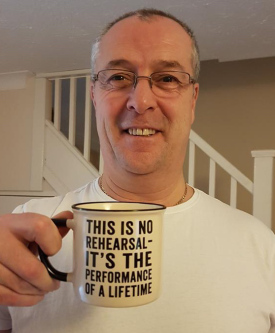
 I had my own ‘issues’. I’ve been in recovery from active addiction since June 2009 with which I had been battling with for 30 years and I had a lot of consequences none more so than my physical state. I’ve been in a coma twice, I’d had a stroke, I’d had the Last Rites read over me, I’d had pancreatitis on a number of occasions, I’d broken near enough every bone in my body, my right lung had collapsed twice and this was before I got into recovery.
 Since getting clean of all drugs, including alcohol, I then had testicular cancer, I’d had a shoulder reconstruction and in 2014, I underwent 4 surgeries on my knees culminating in a full left knee replacement AND to add to the fun, I’d suffered a burst appendix in the summer of 2014 which I was lucky to survive.
  I had also put on a lot of weight as I had been unhappily comfort-eating and although I’m 6ft 5, I was within touch of 20 stone on the scales. I was also in and out of employment and hadn’t held down a regular job for years. The experiences of 2014 were enough for me to want to change a few things. I needed a different way of seeing myself. My physical health (or lack of it) had become my identity. The first thing people would say to me was, “…and how’s the health, Scott?”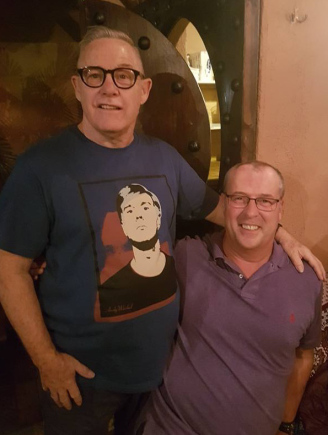
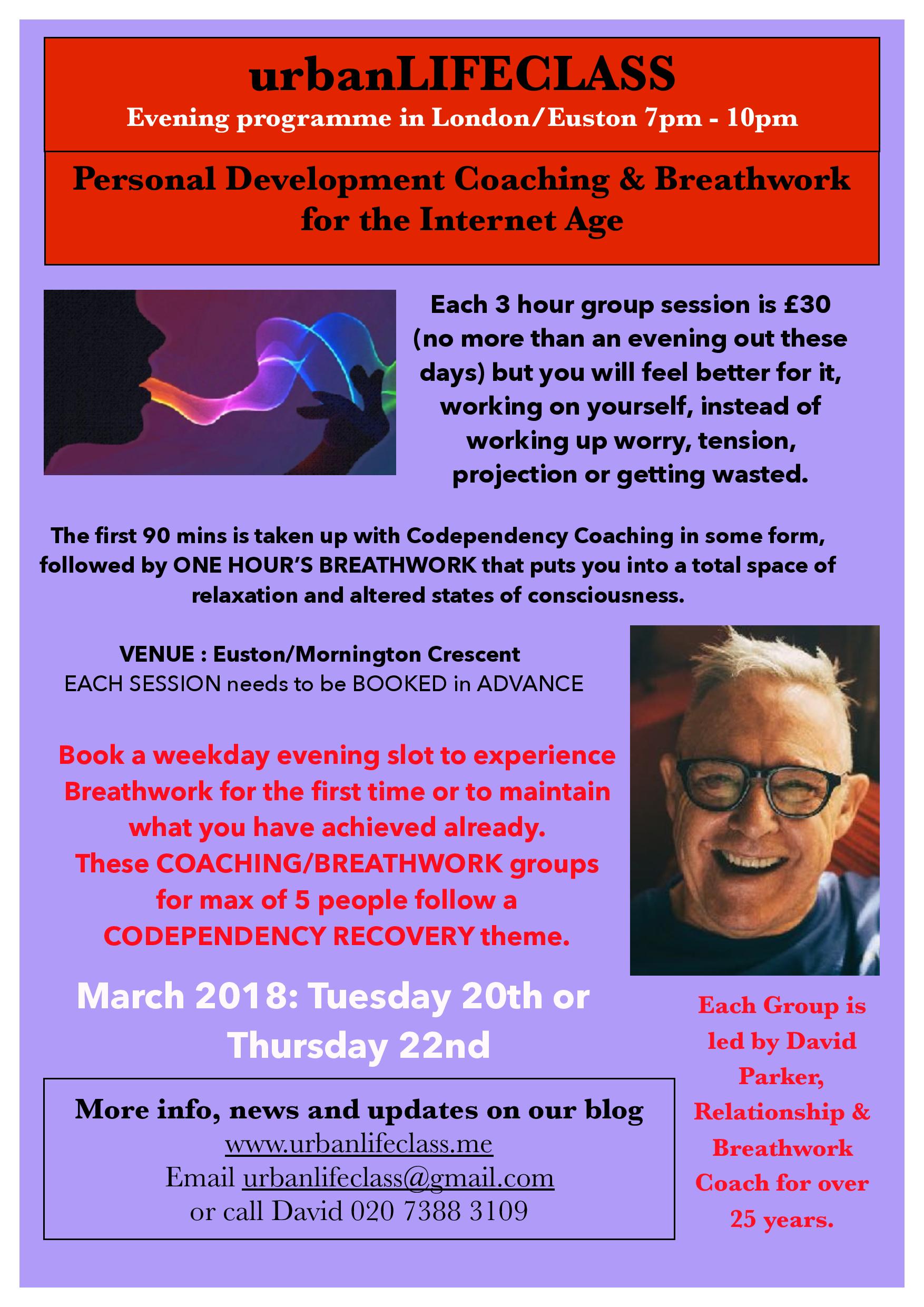
 I became a regular ‘breather’ and I’ve been attending groups and seminars with David more or less monthly ever since that first experience. I travel all the way from Basingstoke Hampshire to Camden NW1 and back for every session. It’s a 3 hour round trip on public transport, it’s the best part of £40 in fares and that doesn’t phase me in the slightest. Nor does the fact I get home at midnight and I’m up at 5.30 the following day for work. The breathwork and the coaching sessions prior to breathing have become an integral part of my continuing recovery. I’ve learnt a lot about me, what makes me tick, what fires me up and acquired great techniques to deal with life and what can crop up for me on a regular basis.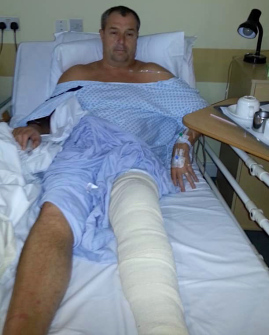




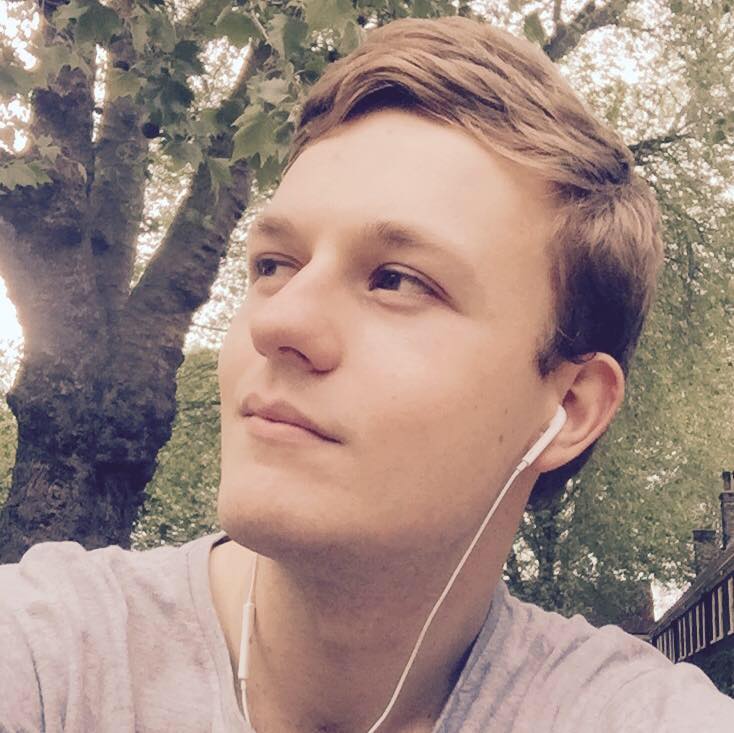 To provide some context, the beginning of the year had been busy for me. January had brought with it a lot of performance gigs; February had seen me direct two shows, as well as mounting my own production, Prevail, with my theatre company, Plain Paper Productions; and in March I turned 24 and seemed to spend a large chunk of the month celebrating (and drinking…lots of drinking!). So that by the time the end of March rolled around, I barely realised that I hadn’t got any work lined up and my bank balance had been worryingly depleted thanks to all the aforementioned “celebrating”. I didn’t know what to do – all I knew was that I needed to work.
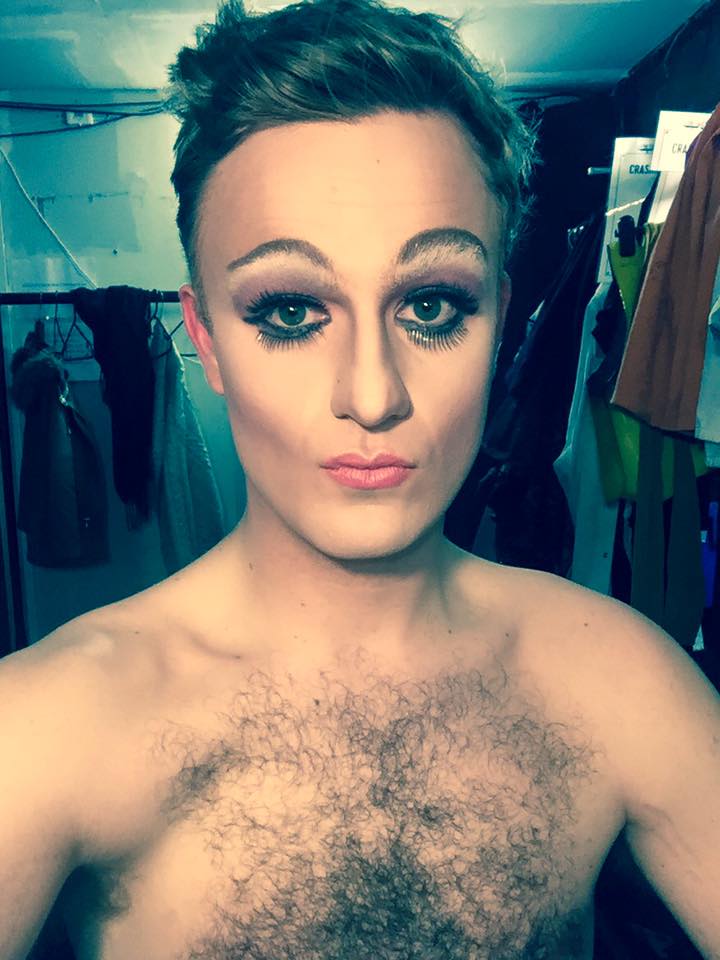 In the space of one afternoon I went from having nothing lined up to having two jobs – one for the day and one for the night.
  Robert Beck is a freelance director and queer performer living and working in London. His recent show ‘Prevail’ was part of Camden LGBT Forum’s History Month programme and is produced by his company Plain Paper Productions. As well as this, he is a drag performer and has appeared at The Royal Vauxhall Tavern, The Bethnal Green Working Man’s Club, and various pubs and bars around London.


 Rebirth Your Life